Commercial Services
Demolition Overview
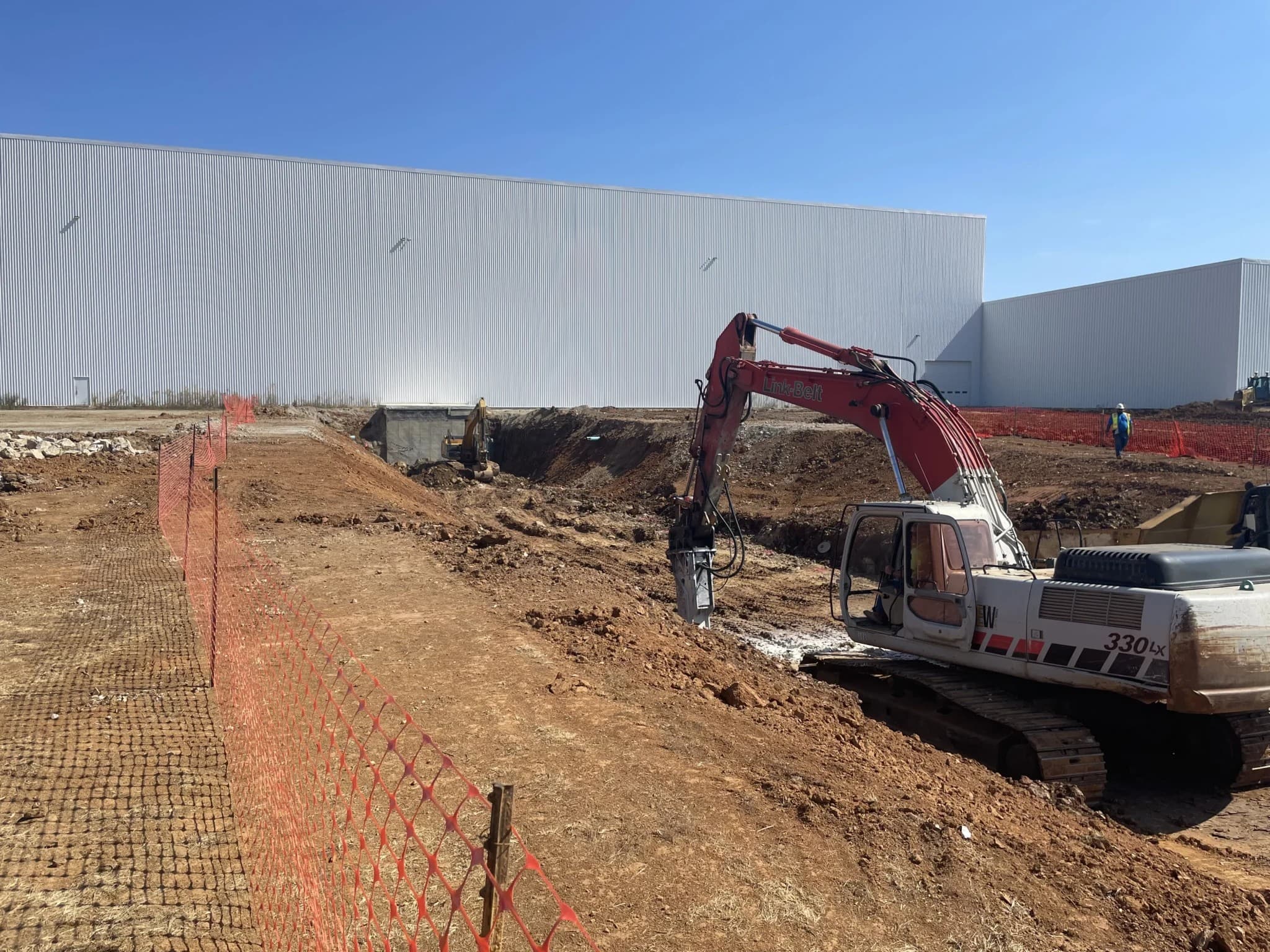
Dallas is a city that remakes itself constantly, and the demolition work that enables that transformation spans the full spectrum from selective interior strip-outs in occupied Uptown office towers to full-block commercial teardowns along Harry Hines Boulevard, the Design District, and the aging industrial corridors of West Dallas and South Dallas. Every project in this market starts with understanding the North Texas expansive black clay — the dark, sticky, shrink-swell Vertisol that underlies virtually all of Dallas and Tarrant County — because this material creates foundation movement conditions that affect not just the structure being demolished but the adjacent structures that need to remain standing after the work is done. Seasonal moisture variation in Dallas produces dramatic changes in this clay: summer drought pulls moisture out and opens shrinkage cracks that can run several inches deep along the perimeter of older commercial foundations, while winter and spring rains saturate the clay and cause it to swell against basement walls, underground utilities, and adjacent footings in ways that require real understanding to manage safely during demolition operations. The pre-1980 commercial and industrial inventory in Dallas is substantial and distributed across every quadrant of the city — from the warehouse and light manufacturing buildings along Singleton Boulevard and Fabrication Street in West Dallas, to the older retail and commercial strips along Forest Lane and Harry Hines in North Dallas, to the industrial zones near the Union Pacific rail yards in Southeast Dallas. These structures overwhelmingly contain asbestos-containing materials in floor tile, pipe insulation, structural fireproofing, and roofing systems, and the City of Dallas Development Services requires documented pre-demolition surveys as part of the demolition permit process for applicable structures. The TCEQ NESHAP asbestos regulations impose a mandatory ten-working-day notification period before regulated demolition activity commences, and our project schedules build that lead time into every pre-construction plan so permit timelines and abatement contractor mobilization align without causing project delays. Utility coordination in Dallas is complex because the underground infrastructure network that has accumulated over more than a century of urban development is dense, often poorly mapped in older areas, and shared among multiple providers — Oncor for electric, Atmos Energy for gas, Dallas Water Utilities for water and wastewater, and a tangle of telecommunications conduit that serves both active users and long-abandoned duct banks. Our standard pre-demolition process includes a full utility locate from Texas811, followed by vacuum excavation to physically expose service lines before any mechanical breaking begins in areas where the locate results indicate underground congestion. This is not optional on Dallas projects — it is standard practice born from experience with what happens when a utility is struck during demolition operations in a dense urban environment. For taller commercial structures in Dallas — particularly the 1960s and 1970s office buildings in and around Downtown, the Stemmons Corridor, and the Park Lane area — conventional top-down wrecking with a hydraulic excavator is sometimes constrained by property line setbacks or the proximity of occupied neighboring buildings, and high-reach demolition equipment or deliberate floor-by-floor deconstruction becomes the right approach. We assess these conditions during the pre-demolition structural review and specify the appropriate equipment and sequencing before mobilizing to site, because changing approach mid-project on a constrained Dallas urban site creates real cost and schedule problems. Material recovery is an active part of every Dallas demolition project — structural steel from 1960s and 1970s buildings has scrap value, architectural elements from older industrial buildings are increasingly sought by the renovation and adaptive reuse market, and concrete rubble is crushed on-site or hauled to area processors, reducing landfill tonnage and tipping fees. Dallas stormwater requirements under the TPDES Construction General Permit apply to demolition projects disturbing one acre or more, and given Dallas's relatively flat topography and the fast-draining concrete and bare soil conditions that result from demolition operations, controlling site discharge during and after heavy rain events is a real planning exercise, not a checkbox. Our site plans include perimeter silt fence, storm drain inlet protection, concrete washout management, and access point stabilization as standard items, with a site-specific BMP selection based on the specific drainage pattern and the receiving waterway for each project site.
Why Choose Commercial Contractors of Dallas for Demolition?
As a Dallas-based commercial contractor, we understand the local permitting requirements, subcontractor networks, and construction logistics specific to the DFW metroplex. Our demolition services are built around the unique demands of North Texas commercial development — from soil conditions and weather patterns to municipal code requirements across Dallas, Fort Worth, and surrounding jurisdictions. We coordinate directly with local inspectors, utility providers, and trade partners to keep your project on track.
Scope Coverage
- Full commercial and industrial building demolition across Dallas County including multi-story structures in the Stemmons, Design District, and Harry Hines corridors
- Selective interior demolition and tenant buildout preparation in occupied Uptown, Downtown, and Knox-Henderson commercial buildings
- Pre-demolition asbestos surveys and licensed abatement coordination per TCEQ NESHAP for all pre-1980 Dallas structures
- High-reach and floor-by-floor deconstruction for taller Dallas commercial buildings with constrained property line setbacks
- Dense underground utility mapping, Texas811 locate, and vacuum excavation before mechanical breaking in all Dallas urban project areas
- North Texas expansive clay foundation removal with soil moisture assessment, shoring where required, and adjacent structure protection
- Concrete crushing on-site or haul-off to area processors with structural steel separation and salvage material inventory
- TPDES stormwater permit compliance including BMP installation and site discharge management throughout demolition operations
- Historic overlay and deed restriction review for demolition in Deep Ellum, the Bishop Arts District, and other Dallas design overlay areas
- Traffic control permit coordination with City of Dallas for demolition projects with access from or impact on major Dallas arterials