Industrial Services
Industrial Construction Overview
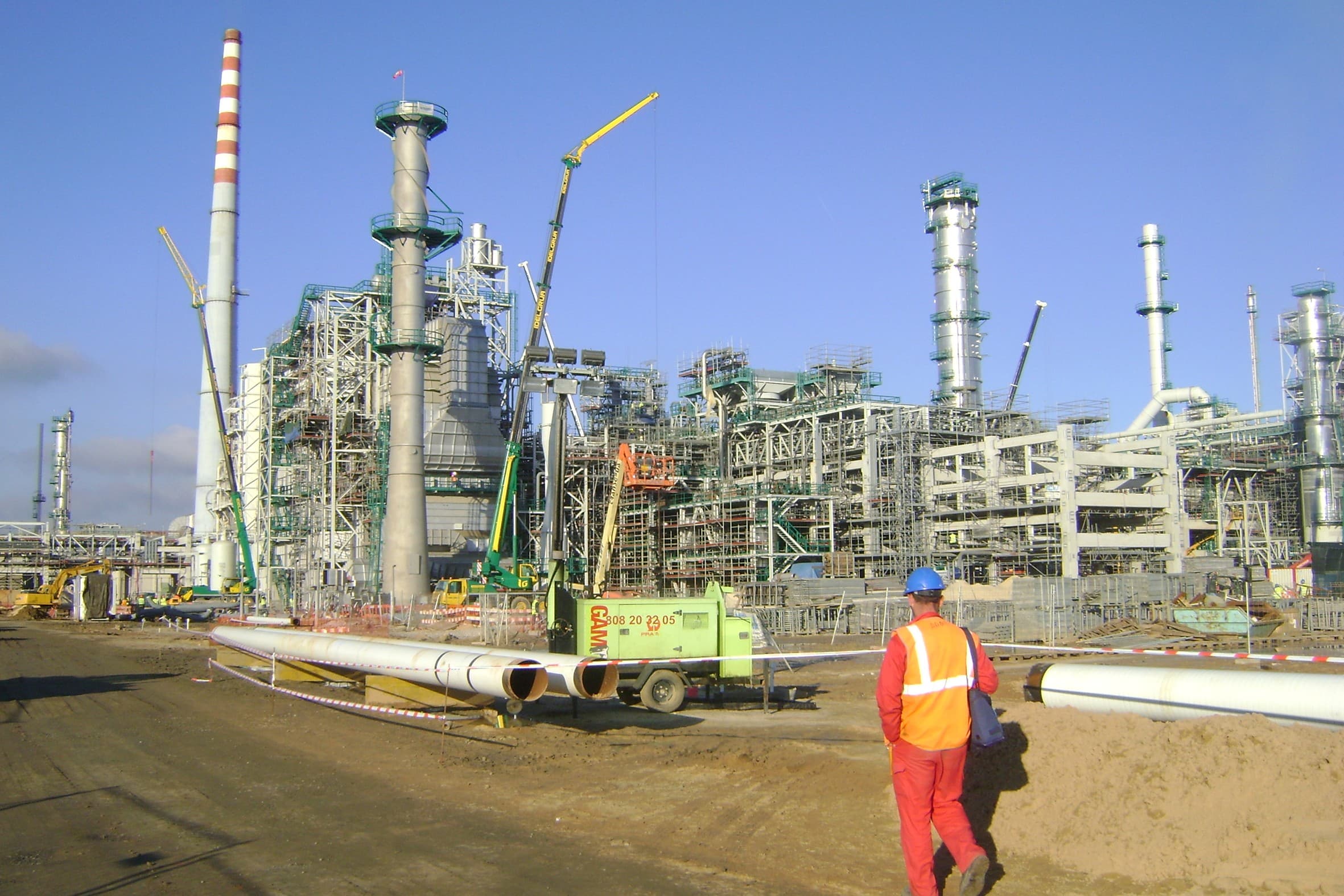
Commercial Contractors of Dallas delivers industrial facility construction for manufacturers, processors, logistics operators, and developers building in the Dallas metro. Dallas is home to Texas Instruments' semiconductor manufacturing campuses, Energy Transfer's downstream operations, and a broad industrial base that stretches from the Stemmons Corridor through the I-20 south logistics arc and east toward Mesquite and Garland's established manufacturing parks. We build for that market — not for generic suburban industrial speculation. Industrial construction in Dallas is not a uniform scope. A semiconductor fab support building in Richardson has completely different utility demands than a food-grade processing expansion in south Dallas, which is different again from a fleet maintenance terminal near the I-635 LBJ interchange. What every industrial project shares is the same basic requirement: the building must open ready to support operations, and every delay between design and occupancy costs the owner real money. We structure our programs to reduce that exposure. Utility capacity planning is where most industrial construction programs succeed or fail in preconstruction. Dallas industrial sites can sit in Oncor service territory, CoServ territory, or ERCOT transmission-adjacent infrastructure depending on location. We verify transformer capacity, confirm service voltage and ampacity against the owner's load schedule, and flag any utility extension work that needs to start months before building permit issuance. Compressed air, process gas, large-bore sanitary and water demands, and three-phase service requirements are mapped against each site in preconstruction — not discovered during MEP rough-in. The Dallas area experienced the October 2019 NW Dallas tornado, which reshaped how many industrial facility owners think about structural envelope and roof system resilience. We incorporate that context into our industrial builds, coordinating with structural engineers on uplift design, recommending Class 4 impact-rated roof systems where appropriate, and specifying metal panel connections that meet or exceed the local wind and hail design pressures. Blackland Prairie clay creates industrial slab challenges that are more severe than standard commercial slabs because industrial floor systems carry heavier point loads, see more moisture cycling from operational water use, and must hold tighter flatness tolerances for forklift safety. We specify moisture-conditioning depth, subbase design, and joint spacing based on the specific geotechnical report for each site rather than applying a single regional standard to every project.
Why Choose Commercial Contractors of Dallas for Industrial Construction?
As a Dallas-based commercial contractor, we understand the local permitting requirements, subcontractor networks, and construction logistics specific to the DFW metroplex. Our industrial construction services are built around the unique demands of North Texas commercial development — from soil conditions and weather patterns to municipal code requirements across Dallas, Fort Worth, and surrounding jurisdictions. We coordinate directly with local inspectors, utility providers, and trade partners to keep your project on track.
Scope Coverage
- Production floor and process area construction with equipment-pad and anchor coordination
- Heavy-duty slab design for forklift loads, rack anchors, and vibration-sensitive equipment
- Subgrade moisture-conditioning and geotechnical verification for Blackland Prairie clay sites
- Utility capacity planning for heavy power, process water, compressed air, and gas loads
- Transformer and electrical service coordination with Oncor and other local utility providers
- Loading dock and truck yard grading, paving, and circulation design
- Safety zoning, access control infrastructure, and separation strategy for production areas
- Structural roof system coordination with Class 4 impact-rated assemblies where required
- Electrical distribution, backup power, and controls integration
- Startup support, commissioning readiness, and turnover documentation for operations teams